
Questions by Tara Sanders Brooks & Tema L. Staig
Sarah Whelden
Sarah Whelden’s cinematography aims to capture the emotional tonalities that fall beyond the limited scope of human language, serving story above all else. Sarah’s work has been screened at major festivals worldwide. She was named a 2025 Rising Star of Cinematography by American Cinematographer and the ASC, and took First Place at Women in Media’s Altitude Awards in the same year. Highlights of 2026 include premiering her single-take thriller THE PLAN at Slamdance Film Festival, along with three films at SXSW, including the coming-of-age story THEIR TOWN. Her magical-realism relationship drama MAGIC HOUR hit theaters nationwide in May of ‘26, and SCREAMS FROM THE TOWER, a high school buddy comedy, hit major streaming platforms in April.
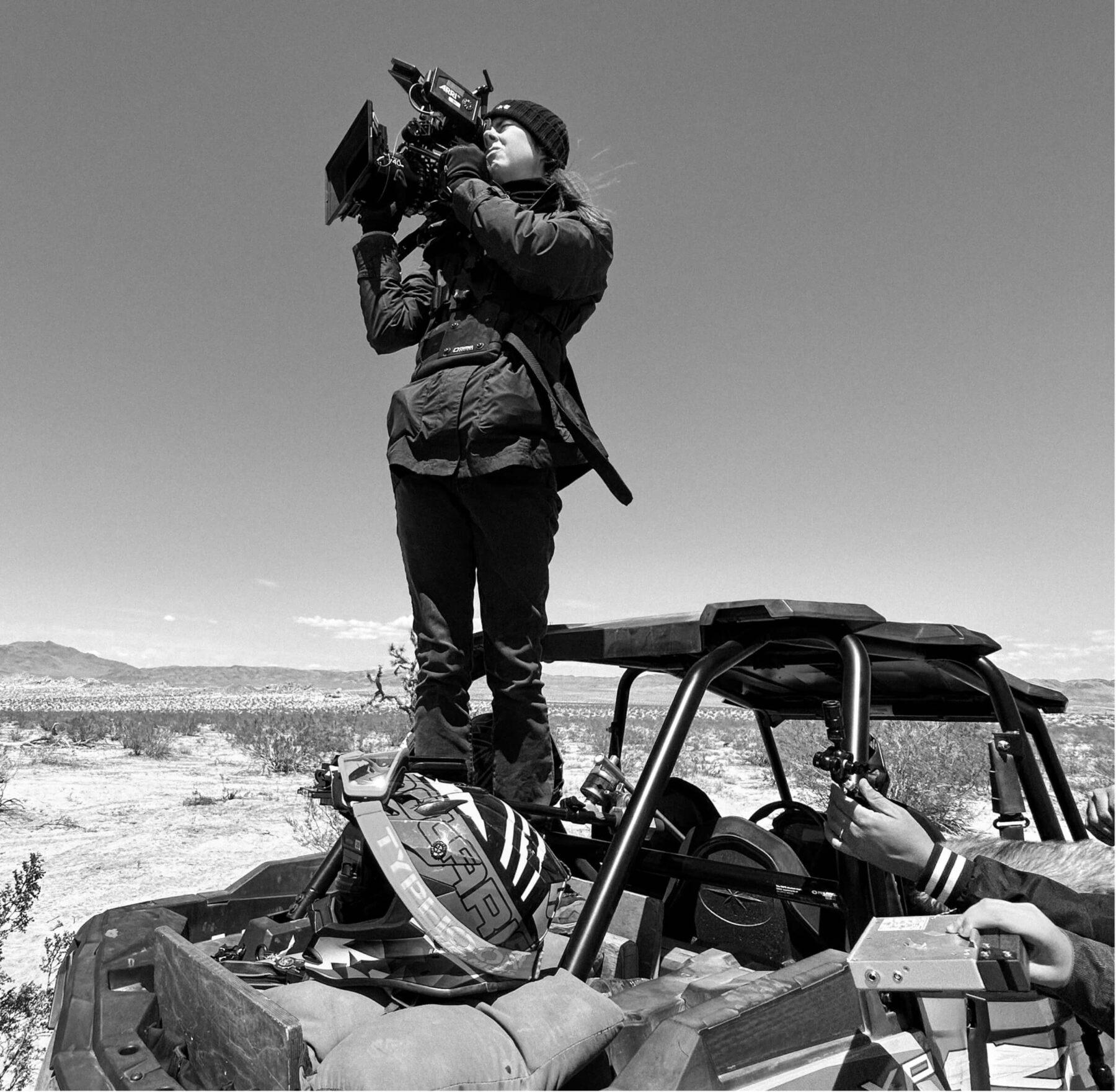
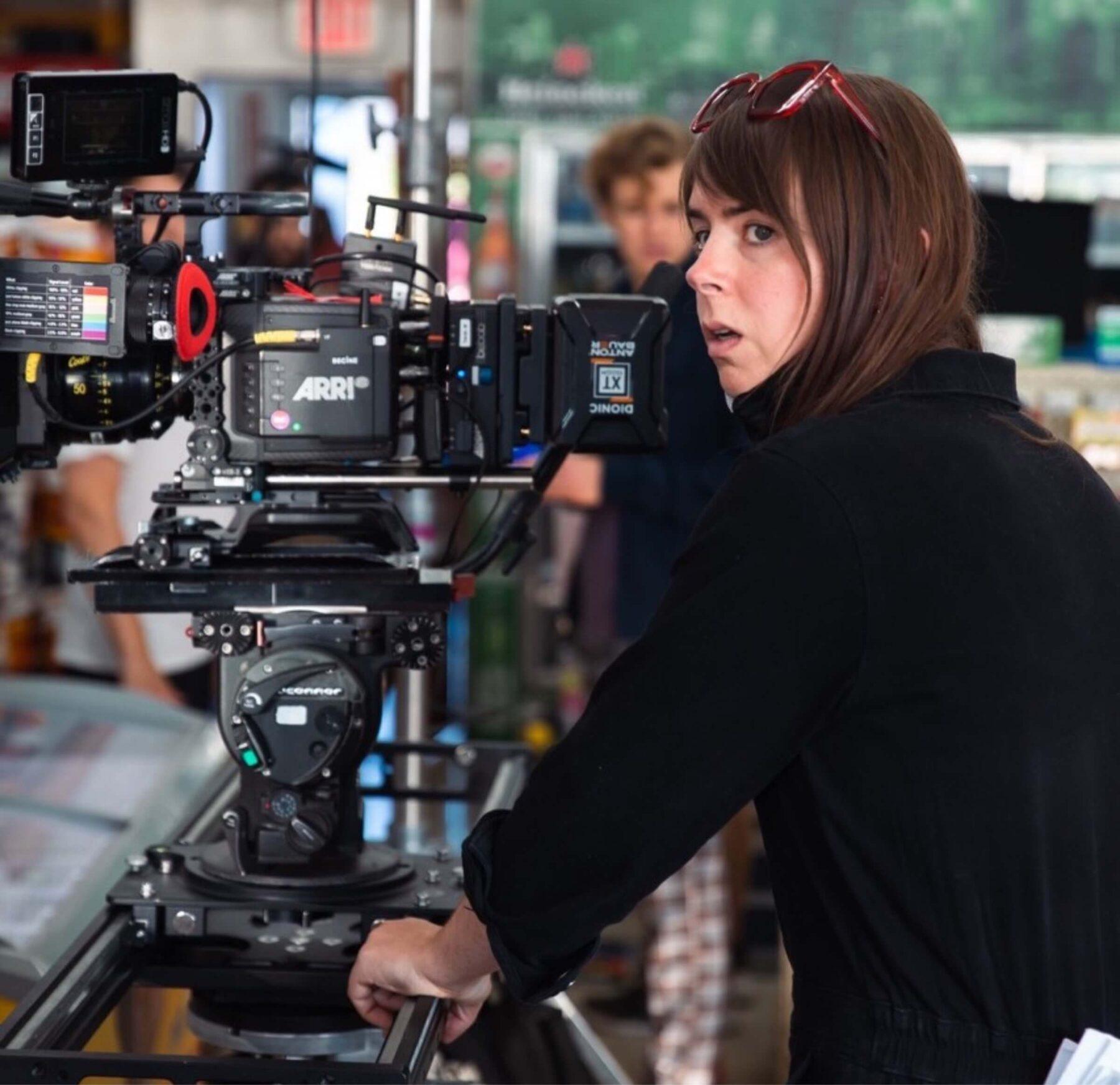
What brought you to cinematography?
Cinematography is this perfect little mix of things my brain is naturally drawn towards. I found photography when I was 10 years old and fell in love with the ability to control the way we see the world. I loved the art form, but found it too lonely and isolating. Music gave me the collaboration that photography lacked. I dabbled in singing, guitar, and music production, but what really kept me going was the pressure of performance. I loved it, yet realized after college that music didn’t provide viable career opportunities.
My foray into the film industry began with editing, which in itself is rhythmic and visual. I was able to hone my storytelling sensibilities, but needed something a bit more collaborative and stimulating. I started working in camera and eventually found cinematography to be a perfect fit.
How did your artistic expression as a musician translate to cinematography?
I found myself connected to the musicality of light and camera movement. In my one-take film THE PLAN, I tapped into my musical roots, balancing structure and improvisation with the dance I fell into with the actors.
The control of choosing a frame and the huge collaboration of making a film are directly related to everything I loved about making music. But something that separates cinematography for me is getting to sit with directors and dig into their brains. It is an incredibly vulnerable and connective process that I value deeply.
Do you listen to music for inspiration when you prep a film?
I can listen to a song a thousand times without giving much consideration to the lyrics. I’m far more interested in the feelings evoked by the melody, rhythms, and overall soundscape. As a visual artist, I’m always trying to push my work beyond the emotional limitations of language, and feel music is such a great place to look for inspiration in this regard.
I love asking directors to send me the playlists they have been listening to while working on a film. Sometimes these are playlists they made to embody the film intentionally, sometimes these are a bit less directly related – but I find that thisan put me into their shoes and help me understand a film very quickly.
How has working as an editor informed your work as a cinematographer?
My job as a commercial editor was to cut excess and help directors craft 30 to 90 second stories. As I transitioned into camera, I found myself always thinking in these terms – do we really need this? Do we have anything to cut to?
Over time I started shooting more branded work, with smaller crews, reacting in the moment. I was forced to trust these instincts and think on my feet in a new way.
When I shot my first narrative feature in 2016, I was surprisingly comfortable thinking through the story, and developing visual motifs. But I quickly realized that long-form storytelling is a wildly different experience that requires immense patience with the camera.
Each format has taught me something different, and the range of those experiences shows up every time I approach a project.
Did you have any early mentors who helped you along the way? Can you also speak to your Vision Mentorship with Polly Morgan? What did you glean from her?
Until the ASC Vision Mentorship, I never had a proper cinematography mentor. The start of my career coincided with the dawn of digital cameras, and thus I was able to start shooting before I was truly ready. That said, I had a host of gaffers, grips, camera assistants, editors, producers, and directors who were incredibly gracious with their time, and patient with me as I was coming up.
The Vision Mentorship was a major shift for me. I finally had access to a cinematographer working at the top of the field, Polly Morgan, ASC, whose work I both admire and see so much of myself in. Just being accepted was in and of itself an enormous confidence boost, and ultimately led to jumping full throttle into narrative filmmaking and moving to LA.
What struck me most about Polly was how much she was able to juggle at any given time. Yet despite being one of the busiest cinematographers working today, she never lost sight of what was most important – her family. I had the opportunity to shadow her on a commercial, and every day right at wrap, she was out the door and on her way home. My version of this has become walking on the beach before sunset anytime I can.
Did you have any early mentors who helped you along the way? Can you also speak to your Vision Mentorship with Polly Morgan? What did you glean from her?
Until the ASC Vision Mentorship, I never had a proper cinematography mentor. The start of my career coincided with the dawn of digital cameras, and thus I was able to start shooting before I was truly ready. That said, I had a host of gaffers, grips, camera assistants, editors, producers, and directors who were incredibly gracious with their time, and patient with me as I was coming up.
The Vision Mentorship was a major shift for me. I finally had access to a cinematographer working at the top of the field, Polly Morgan, ASC, whose work I both admire and see so much of myself in. Just being accepted was in and of itself an enormous confidence boost, and ultimately led to jumping full throttle into narrative filmmaking and moving to LA.
What struck me most about Polly was how much she was able to juggle at any given time. Yet despite being one of the busiest cinematographers working today, she never lost sight of what was most important – her family. I had the opportunity to shadow her on a commercial, and every day right at wrap, she was out the door and on her way home. My version of this has become walking on the beach before sunset anytime I can.
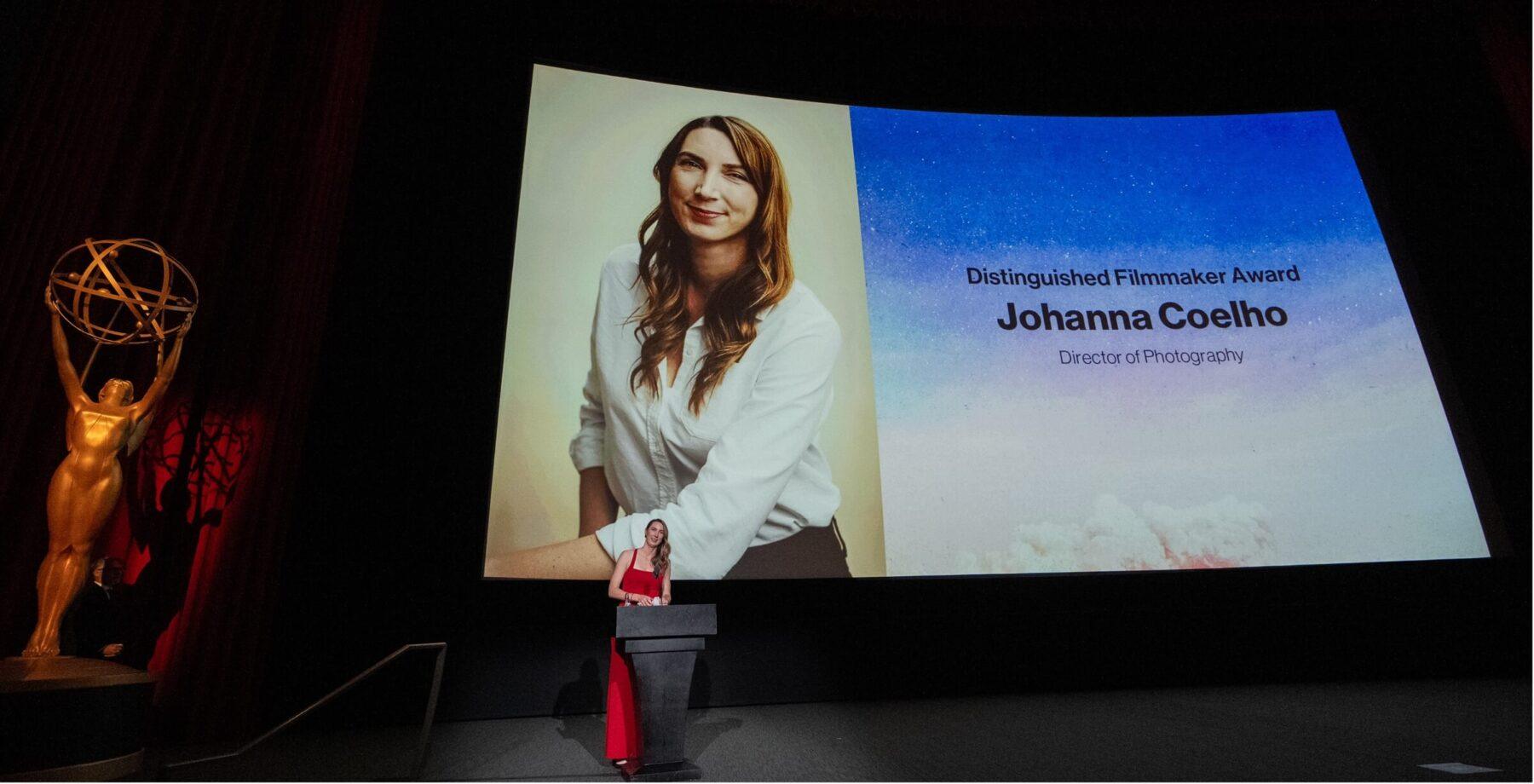
How did winning the Altitude Award affect your career?
I moved to LA in 2022. I met tons of people that year, trying to go to every event I could and build a community for myself. I remember finding out about WIM and the Altitude Awards at Cine Gear that year, and seeing so many DPs I looked up to holding awards. In 2023 I submitted my application and portfolio, went to the awards, and didn’t place, but was again inspired by all the incredible winners. I was determined to apply again and hopefully place as a semi-finalist, but when 2024 rolled around I didn’t feel like my portfolio had grown enough. By 2025 I had a refreshed application with a lot of new work. I submitted again, and to my immense surprise, I took first place!
The achievement alone meant the absolute world to me. It was a glimpse into my growth over three years in LA, and getting to read the feedback from all of the esteemed judges and DPs I admire was unreal. The support from WIM, Tema, and all of the brand sponsors has given me a ton of momentum over this past year.
How did being named a Rising Star of Cinematography affect your career?
Funny enough, I found out that I was selected as one of American Cinematographer’s Rising Stars of Cinematography on the same day I found out I won the Altitude Awards. Truly a day I will never forget. It can be hard to quantify these things, but they add up. I received so many messages from folks in the days and weeks following the release of the AC edition that announced my place, some of whom I hadn’t heard from in many years.
What really blows my mind is that you don’t apply to be a Rising Star – they find you. Being seen by the best cinematographers in the world, and selected among seven peers I deeply respect, tells me that I’m on the right track. It helps me to quiet the doubts and to push forward.
What project are you most proud of and why?
I can’t possibly pick one project I’m most proud of. Even the less successful ones helped get me here. That said, THE PLAN, a true one-take thriller with a shoestring budget that I shot, helped produce, and received story-by credit for, just won Best Feature at the Lower East Side Film Festival and I truly could not be more proud.
What is the best advice you can give to young female and non-binary filmmakers looking to pursue a career in film?
In a world full of advice – I encourage newer (not necessarily younger) filmmakers to not take every piece of advice they hear to heart. As creatives, our brand is our individuality, and when you overload yourself with advice on how to do something, you can easily lose your identity as an artist. I think this is especially important for women, trans, and non-binary folks. Our voices and visions have been minimized for so long, and thus have so much still to add to the cultural zeitgeist.

